
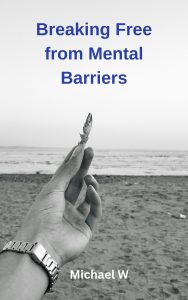
The information in this article is an overview of a chapter in the book “Breaking Free from Mental Barriers”. The book contains exercises, templates and action items to help put these ideas into practice.
Mental barriers often feel like invisible chains that restrict personal potential and hinder growth. These chains are frequently composed of overthinking, self-doubt, and the tendency to avoid uncomfortable emotions. While mindfulness serves as a foundational tool for building awareness of these patterns, meditation provides a dedicated practice to process these feelings safely and deeply. By committing to regular practice, individuals can transform suppressed emotions from heavy burdens into valuable insights that foster resilience.
Meditation is essentially a period of dedicated time used to cultivate inner calm. It involves using focused techniques to lead the mind toward a state of clarity. This practice extends the observations learned through mindfulness into a more active engagement with the self. It creates a safe environment where suppressed feelings can unfold without causing a sense of being overwhelmed. Where emotional avoidance thrives on pushing feelings aside, meditation encourages sitting with discomfort to gradually dissolve the resistance that keeps mental barriers in place.
The benefits of this practice are supported by modern science as well as ancient traditions. Research confirms that meditation plays a significant role in lowering stress hormones such as cortisol. Regular practice has also been shown to reduce symptoms of depression by promoting changes in the areas of the brain that are responsible for regulating emotions. Beyond the mental impacts, there are clear physical advantages, including improved immune function and better sleep quality. As the body relaxes from chronic tension, the mind becomes clearer, which helps in making decisions more freely.
Several techniques exist to help individuals begin this journey. A basic breath-focused routine is a common starting point. This involves finding a comfortable seat and directing attention to the natural flow of the breath, noting the rise and fall of the abdomen. When a wave of worry or a specific emotion arises, the practitioner acknowledges it silently before returning their focus to the breath. This simple routine, when performed daily, builds a sense of familiarity with one’s internal state.
Another effective method is body awareness or a body scan. In this practice, an individual sits or lies down and slowly moves their attention from their head to their toes. By pausing at areas where tension is held, the practitioner can acknowledge the physical manifestation of their emotions. For those who prefer a more structured approach, transcendental meditation involves a twenty-minute session twice a day to quiet the mind and allow buried feelings to emerge without force. This technique has been linked to lower blood pressure and reduced levels of anxiety.
Movement-based options, such as walking meditation, are also available for those with active lifestyles. During a slow stroll, the individual synchronizes their steps with their breath while noting any rising feelings. This integrates emotional processing directly into a daily routine. Additionally, loving-kindness meditation focuses on releasing pent-up feelings of frustration or anger by directing positive intentions toward oneself and others. These diverse methods emphasize that persistence is more important than achieving perfection in any single session.
Establishing a consistent routine is vital for long-term success. Selecting a dedicated space that is free from interruptions can signal a commitment to the practice. It is often helpful to start small, perhaps with sessions lasting only five minutes, before gradually extending the time as comfort increases. Keeping a notebook to track experiences can help in recognizing how emotions shift over time. Utilizing applications that provide reminders and progress metrics can also assist in maintaining consistency. Since habit formation typically takes about two months, patience is a necessary component of the process.
It is natural to encounter challenges when starting a meditation practice. Many people struggle with a wandering mind where thoughts intrude persistently. Instead of feeling frustrated, this should be viewed as an opportunity to observe the underlying emotional currents. Others may feel skepticism about the benefits or experience physical discomfort such as fidgeting. This restlessness often signals that avoided tension is being released, and breathing through the sensation can lead to a breakthrough. Even if time is limited, short bursts of meditation during breaks or commutes can provide relief that is comparable to longer sessions.
Advanced techniques can further deepen the processing of emotions. Visualization involves pairing meditation with the act of imagining a serene place and then inviting a specific emotion, like anger, to appear as a colour or a shape. By watching that shape transform or fade with each breath, the intensity of the emotion can be reduced. Sound-based meditation is another option, using instruments like singing bowls or simple chants to create vibrations that ground the senses. These methods provide additional avenues for those who find that traditional sitting meditation does not fully meet their needs.
Ultimately, the goal of these practices is to integrate them into a lifestyle where even mundane tasks become meditative. As the practice matures, the benefits compound over time. Anxiety diminishes as emotions are allowed to flow freely, which frees up mental energy for more productive pursuits. Relationships often improve because the inner calm gained from meditation leads to a more empathetic presence with others. By transforming suppressed emotions into allies rather than enemies, individuals can break the hold of avoidance and move toward a life marked by authenticity and peace.
To talk about any aspect of success or working with a Life Coach to help you to achieve success, you can book a 30-minute call by clicking on the blue button below.

Don’t try to do all of this by yourself, ask and receive the guidance that can get you moving towards your own success.
Working together can help you overcome personal and professional barriers, ensuring you reach your highest potential.
Nothing happens until action is taken.
To your success.
Michael

P.S Don’t forget to visit Confidology to learn more about the full program being offered to build up your confidence in aspects of your life.
P.P.S. I have posted a series of 5 articles “Unleashing Your Inner Strength: A Guide to Lifelong Confidence” that you should read if your confidence level seems to always fluctuate.
P.P.P.S. I have a series of 4 articles on the “Fear of Success” that I have posted. You can also request a free PDF of all 4-articles by sending me an email message at coachmgw@outlook.com
P.P.P.P.S. If you enjoy reading these articles on my blog, I have more books that have more of this type of information that you can find out more about at Books to Read. You can buy these ebooks at many on-line book stores. The links to the bookstores are at the link above.
Photo by Brian Mann on Unsplash