
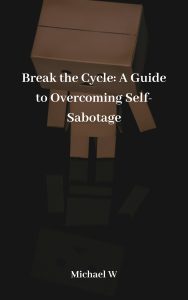
The information in this article is an overview of a chapter in the book “Break the Cycle: A Guide to Overcoming Self-Sabotage”.
Self-sabotage hides in the background of many people’s lives, quietly working against their best efforts to reach goals and find satisfaction. It shows up in ways like putting off important tasks, questioning one’s abilities or setting standards so high that nothing gets done. This behaviour can stop progress before it even starts, affecting both personal happiness and career success. By looking closely at what self-sabotage really means, its different forms, the reasons it happens, and the damage it causes, people can start to see it more clearly. This awareness opens the door to making real changes. The ideas here draw from a mix of psychological knowledge and everyday observations, aimed at anyone ready to tackle these patterns and move toward a more positive path.
At its core, self-sabotage involves actions or thoughts that block personal growth or well-being. These patterns create barriers that keep individuals from hitting their targets. For example, a person might push back starting a new project because of worries about not doing it well, or they might find fault in their work so much that it slows everything down. Unlike problems caused by outside factors, such as bad luck or other people’s actions, self-sabotage comes from within. It can be a conscious choice, like choosing to skip a chance to advance to dodge extra duties, or it can happen without full awareness, such as thinking about a job so much that it becomes too overwhelming to begin. In both cases, the result is the same: missed opportunities and untapped abilities. Spotting these habits is key because it shines a light on what needs to shift.
One important way to understand self-sabotage is by separating the deliberate kind from the automatic type. Deliberate sabotage happens when someone makes a clear decision to act in a way that harms their progress. This could mean turning down a helpful offer out of fear that it might lead to failure down the line. On the other hand, automatic sabotage runs on habits formed over time, often linked to old experiences or beliefs that sit below the surface. A person might keep making the same mistakes in relationships, not realizing it’s tied to a fear of getting close to others. These hidden patterns can be tougher to catch because they feel like normal reactions. Thinking back on choices made in the past few weeks can help figure out if the issues stem from active avoidance or from routines that have become second nature. Knowing this difference allows for better plans to handle each type.
The reasons behind self-sabotage often trace back to deep emotional and mental sources. Fear of not succeeding stands out as a major driver, pushing people to steer clear of situations where they might fall short. This avoidance can seem like a safe move in the moment, but it limits growth over time. In a similar way, the worry about what success might bring can lead to the same result. Reaching a goal could mean more expectations from others or changes in daily life that feel uncomfortable. Low feelings of self-worth add to this by creating inner voices that say success isn’t deserved. From a broader view, the way humans are built plays a part too. The brain focuses on staying safe, sometimes seeing new goals as risks to avoid. Experiences from earlier years, like facing harsh judgments, can plant ideas that grow into these self-defeating actions later on. Seeing self-sabotage as a reaction to inner struggles rather than a weakness makes it easier to approach with understanding.
These causes don’t exist in isolation; they build on each other. For instance, a fear of failure might start small but grow stronger with each avoided challenge, reinforced by negative self-talk. Over time, this creates a loop where the behaviour feels familiar and hard to break. Emotional factors, such as feeling unworthy or anxious about change, fuel the cycle. Even basic survival instincts, evolved to protect against real dangers, can misfire in modern settings where risks are more about personal goals than physical threats. Past events shape how these instincts show up, turning what was once a helpful response into something that holds people back. By tracing these roots, it’s possible to see that self-sabotage isn’t random but a response to unresolved feelings or learned behaviours.
The effects of self-sabotage spread far and wide, touching every part of life. On a personal level, it chips away at confidence, making it hard to trust one’s own decisions. This can lead to ongoing stress and a sense of being stuck, where goals feel out of reach. In relationships, it might mean pulling away from closeness to avoid possible hurt, resulting in shallower connections or conflicts. At work, the pattern can block advancement, such as by delaying tasks or shying away from new roles, which might end in lost chances or even setbacks in one’s position. Overall health takes a hit too, with constant inner criticism leading to higher levels of worry and tiredness. As these behaviours repeat, they build a sense of regret that makes trying again seem pointless. The longer it goes on, the more it strengthens the idea that improvement is too hard, creating a barrier to positive shifts.
Beyond the immediate impacts, self-sabotage can create long-term patterns that affect future opportunities. For example, repeated delays in personal projects might mean missing out on building skills that could lead to better outcomes later. In social settings, it can strain ties with friends or family, as others might see the behaviour as unreliable or distant. The mental toll adds up, potentially leading to broader issues like lowered motivation or a pessimistic outlook. Recognizing how these consequences build over time highlights why addressing the problem early matters. It prevents small habits from turning into major roadblocks, allowing for a smoother path toward goals.
Self-sabotage also influences how people view their own potential. When actions consistently undermine efforts, it can lead to a belief that success is for others, not oneself. This mindset reinforces the cycle, making it harder to break free. In professional environments, it might show as hesitation to speak up in meetings or to take on leadership, limiting career paths. Personally, it could mean avoiding hobbies or interests that bring joy, out of fear they won’t turn out well. The key is understanding that these effects are not permanent; they stem from changeable behaviours. By acknowledging the wide-reaching damage, motivation grows to seek ways to interrupt the pattern.
To sum up, self-sabotage is a complex issue that starts within but affects everything around it. From its basic definition to the split between conscious and hidden forms, and from its emotional roots to the broad consequences, grasping these elements provides a solid base for change. It turns what feels like an uncontrollable force into something that can be managed. With this knowledge, individuals can begin to question their habits and make choices that support rather than hinder their aims. Moving ahead requires ongoing attention, but the first step is seeing the problem for what it is — a barrier that can be overcome with patience and effort.
To talk about any aspect of success or working with a Life Coach to help you to achieve success, you can book a 30-minute call by clicking on the blue button below.

Don’t try to do all of this by yourself, ask and receive the guidance that can get you moving towards your own success.
Working together can help you overcome personal and professional barriers, ensuring you reach your highest potential.
Nothing happens until action is taken.
To your success.
Michael

P.S Don’t forget to visit Confidology to learn more about the full program being offered to build up your confidence in aspects of your life.
P.P.S. If you enjoy reading these articles on my blog, I have more books that have more of this type of information that you can find out more about at Books to Read. You can buy these ebooks at many on-line book stores. The links to the bookstores are at the link above.
P.P.P.S. I have a series of 4 articles on the “Fear of Success” that I have posted. You can also request a free PDF of all 4-articles by sending me an email message at coachmgw@outlook.com
Image by Gerd Altmann from Pixabay