
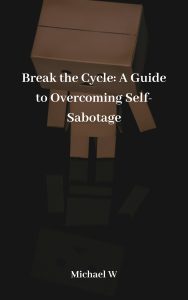
The information in this article is an overview of a chapter in the book “Break the Cycle: A Guide to Overcoming Self-Sabotage”. The book contains exercises, templates and action items to help put these ideas into practice.
Self-sabotage takes many shapes, frequently appearing as inner voices or actions that seem small but build up over time. These tendencies can harm confidence and bonds with others. Here, we examine two key types: self-criticism and doubt, as well as sabotaging relationships. We discuss their beginnings, what sparks them, and their influence on life. This content is meant for anyone looking to grow personally, combining clear explanations with everyday examples to encourage recognition and steps toward improvement. The aim is to inspire a sense of control and optimism in dealing with these issues.
Self-criticism and doubt form an inner conversation that weakens assurance. Ideas such as “I’m not capable” or “This will go wrong” reduce drive, causing people to hold back. This tough inner speech often happens without thinking, based on previous events or group norms. Different from helpful advice, self-criticism is ongoing and unclear, giving no clear direction. Doubt makes it stronger, leading to pauses even when good options appear. Seeing this talk as self-sabotage allows people to question it, creating a more supportive inner tone.
Self-criticism commonly goes back to young years or important times. A guardian’s strict hopes or an instructor’s rejection can start doubts that last. Shared ideas, like the need to always stand out, support this habit. It also connects to high standards, as people measure themselves against goals they can’t meet. A person who thinks “I need to be without mistakes” might find fault in every little thing. Knowing these starts helps separate outside effects from personal value, lessening the strength of bad thoughts.
Doubt affects choices by making them unclear, resulting in passed-up moments. A worker might turn down a higher position, thinking they don’t have what it takes, even with proof otherwise. Doubt forms a loop where waiting boosts uncertainty, complicating later choices. It also impacts new ideas, as people question concepts before trying them. This standstill blocks development and satisfaction. Acknowledging doubt’s role lets people start believing in their strengths, making gradual moves to increase sureness and clear thinking.
Self-sabotage reaches into relationships, where actions like distancing others or starting disputes weaken ties. A person might pull back from a close one, afraid of showing true feelings, or argue to keep distance. These steps usually come from worry about being left or feeling undeserving. In work environments, it could mean skipping team efforts because of uncertainty. Such behaviours break trust and create separation, adding to feelings of being alone. Identifying this type of sabotage aids in cherishing links and tackling the worries behind actions.
Sabotage in relationships often connects to feeling-based prompts. Worry about being left could cause testing a companion’s commitment through disagreements. Lack of confidence can lead to too many sorrys or guarding, which stresses exchanges. Earlier disloyalties or turn-downs make these habits bigger, making reliance hard. At jobs, concern about judgment might lead to pulling away from coworkers. Noting these prompts gives a chance to stop before acting, leading to better interactions. Thinking about how one handles bonds can show repeated ways.
The results of sabotaging relationships are clear and lasting. A leader unsure of their role might oversee too closely, pushing away their group and blocking joint work. In private life, fear of rejection could mean cutting off a companion, making gaps that are tough to fix. These moves cause aloneness, regret and weakened links. As time passes, ongoing sabotage can wear down help networks, making aims tougher to reach. Looking at these results shows the wider effects of actions, encouraging care for relationships instead of harming them.
Self-criticism and doubt, together with relationship sabotage, arise from emotional and thinking foundations. They show in usual situations to halt advancement. With this awareness, individuals can switch out damaging patterns for supportive ones. Progress includes fostering insight and applying methods to match actions with real targets, paving the way for deeper fulfillment.
To talk about any aspect of success or working with a Life Coach to help you to achieve success, you can book a 30-minute call by clicking on the blue button below.

Don’t try to do all of this by yourself, ask and receive the guidance that can get you moving towards your own success.
Working together can help you overcome personal and professional barriers, ensuring you reach your highest potential.
Nothing happens until action is taken.
To your success.
Michael

P.S Don’t forget to visit Confidology to learn more about the full program being offered to build up your confidence in aspects of your life.
P.P.S. I have posted a series of 5 articles “Unleashing Your Inner Strength: A Guide to Lifelong Confidence” that you should read if your confidence level seems to always fluctuate.
P.P.P.S. I have a series of 4 articles on the “Fear of Success” that I have posted. You can also request a free PDF of all 4-articles by sending me an email message at coachmgw@outlook.com
P.P.P.P.S. If you enjoy reading these articles on my blog, I have more books that have more of this type of information that you can find out more about at Books to Read. You can buy these ebooks at many on-line book stores. The links to the bookstores are at the link above.
Photo by Tara Winstead: